response SLA
Enterprise Knowledge Library
Your enterprise knowledge, shipped as a custom AI agent
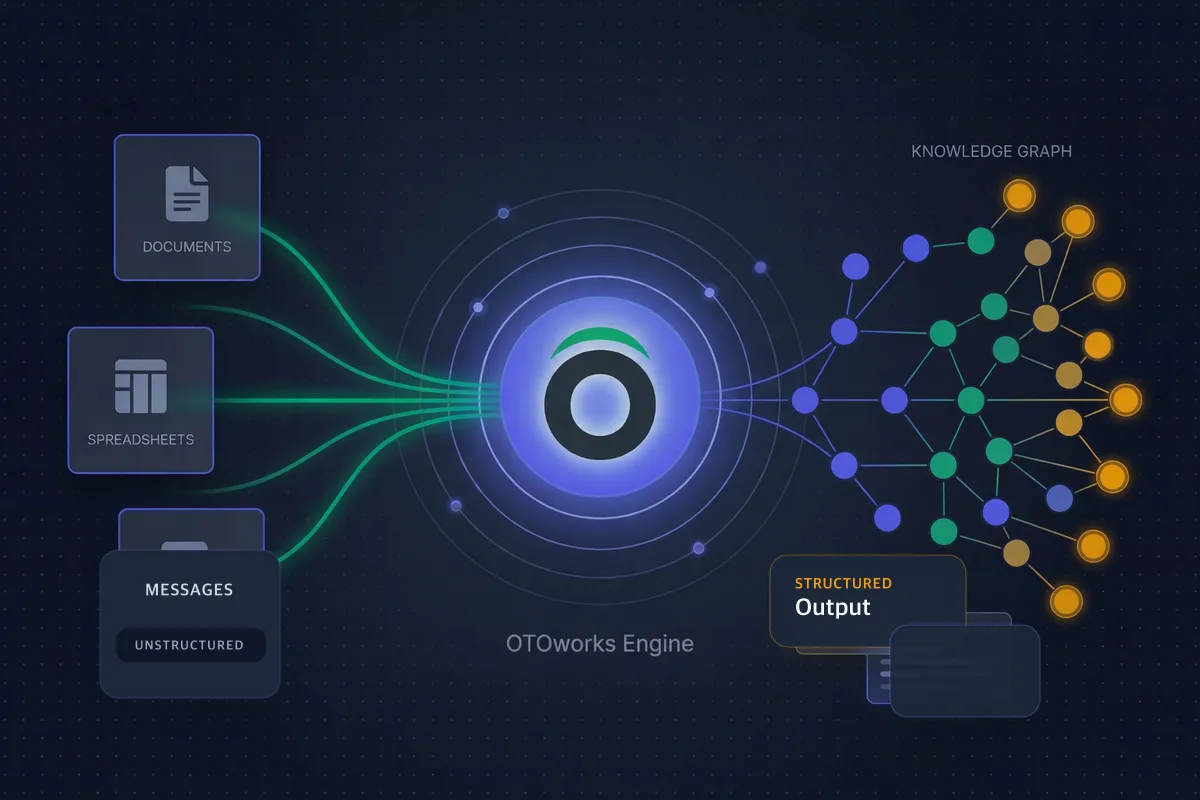
Docs, messages, ops data, and approval flows pulled into one knowledge library. On top of it, a custom AI agent that fits how your team actually works — not a packaged tool, but a build shaped around your operation.
average PoC lead time
build per domain
Enterprise Knowledge Library
Into the knowledge library
Policies, SOPs, and approval criteria
Messages, approvals, email, and frontline requests
Operational data, exception cases, and human judgment
Agents that run in production
Decision-ready automation flows
Execution logic with governance built in
Operational rollout with monitoring and handoff in mind
Enterprise AI Agents in production
Tying enterprise knowledge into custom AI agents — across many industries
- Global resale commerce
- Listed e-commerce
- Global D2C beauty
- Premium private education
- Insurance · Finance
- Logistics · Transport
- Professional services
- Healthcare
Real Client Case Studies
Actual automation projects we've shipped with clients
Process Automation
Food manufacturing and distribution
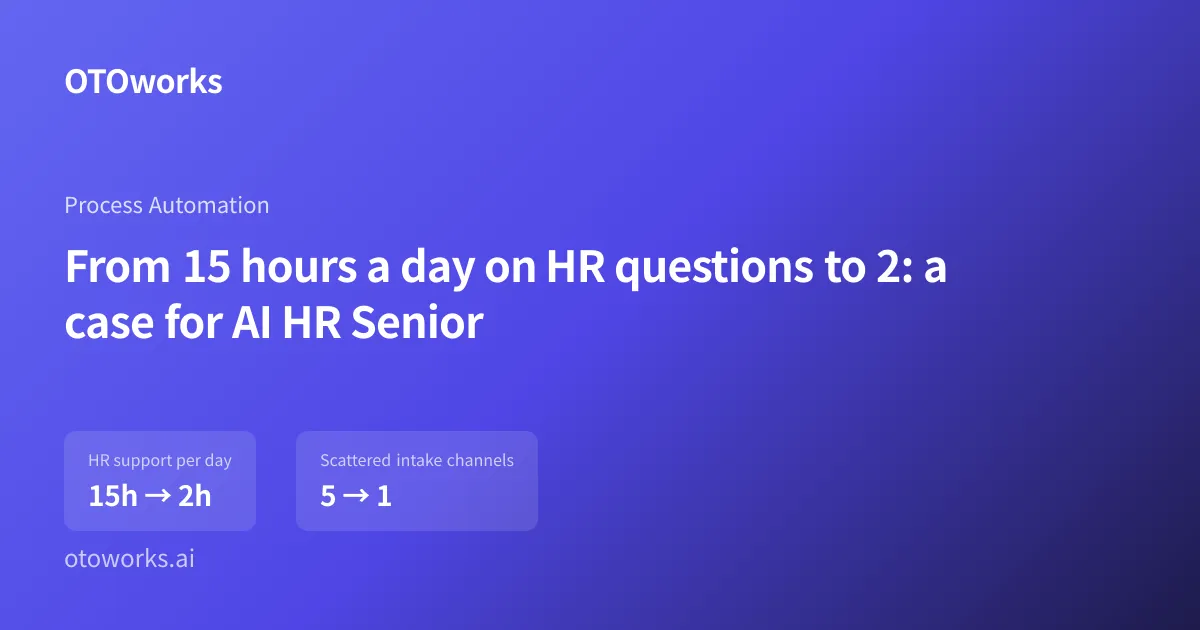
The documents existed. The answers still lived in people's heads.
The client is a mid-sized food manufacturing and distribution company with about 1,000 employees. Its workforce is split across office staff, factory workers, and foreign workers, and leave, allowances, expense rules, and onboarding all vary by group. Some answers were available in ERP or groupware. Others lived in shared files, NAS folders, personal notes, or spreadsheets used only for foreign-worker guidance. Questions came in through more than one path: company email, the internal messenger, the office phone, walk-ups straight to a desk, and the occasional sticky note left on a monitor. To answer one question, an operator had to check recent support cases, the document used last time, the original policy, and often a long-tenured colleague's memory. The same question could sound different depending on who picked it up. Even deciding whether a case needed outside labor counsel took time.
15h → 2h
HR support per day
5 → 1
Scattered intake channels
Process Automation
Content Marketing
Plenty of tools, but content still never left human hands
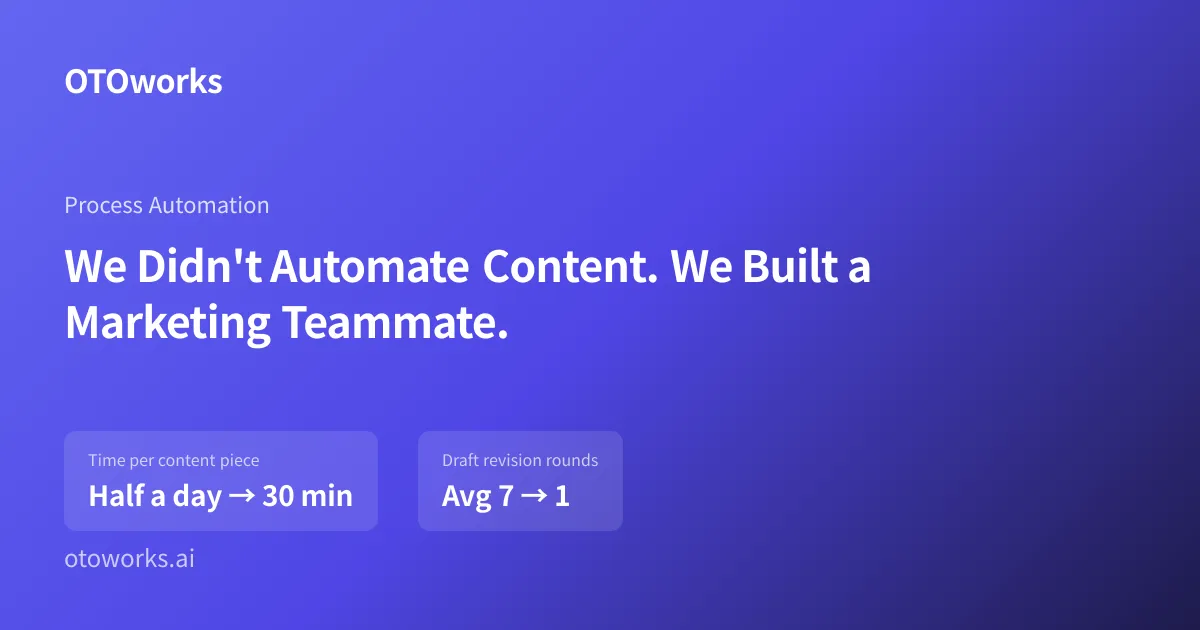
Ad platforms, CRM, analytics, AI writing assistants. The marketing stack was full. The team still kept getting stuck in the same place: content. Topics got picked on gut feel. Writing standards drifted between people. Every platform needed manual reformatting. Adding draft automation didn't fix it. It just shifted the work. Someone still had to rewrite the AI output line by line, and the automation that was supposed to save time quietly created a new review workload.
Half a day → 30 min
Time per content piece
Avg 7 → 1
Draft revision rounds
Process Automation
Legal Services
Phone-only consultations, case management by memory alone
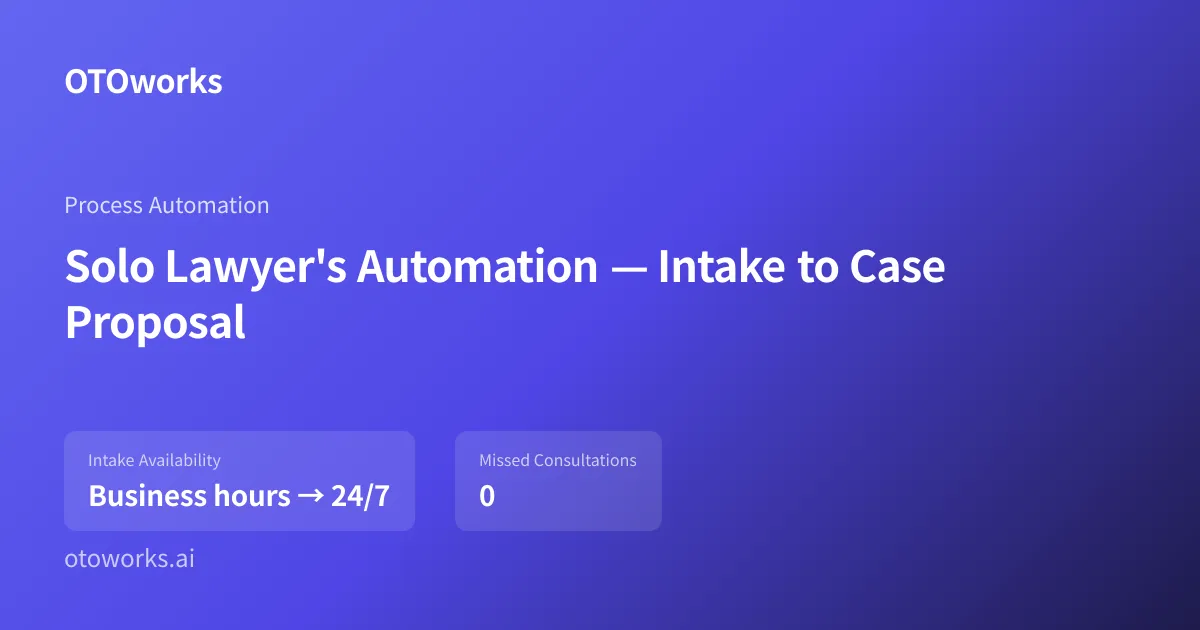
After leaving a law firm to open a solo practice, the lawyer ran into a different kind of problem. Handling cases well and bringing cases in were not the same thing at all. Consultation requests came only by phone, and the history was scattered across notepads and memory. Miss one call, lose a potential client. From the client's side, calling a lawyer in the first place felt like a hurdle. And not every consultation turned into a case. Simple questions were taking up the same time as serious matters, which left less room for the work that really mattered.
Business hours → 24/7
Intake Availability
0
Missed Consultations
AI infrastructure that understands your work
What is OTOworks Engine
As work inputs are turned into automation logic, we model relationships, rules, and operating context together. The point is not just document retrieval, but bringing the way work actually runs into the system.
01
Relationship-aware AI
Not just document search. We map the relationships and context across your work, and a domain knowledge graph grounds every AI decision.
02
Custom build
This is not an open-source SaaS. We analyze your processes, documents, and systems to build a dedicated ontology and RAG pipeline for you.
03
Running in production
Shipping is not the end. We wire it into real operations, collect field feedback, and improve the system with you over time.
Enterprise Engagement Process
A continuous path from diagnosis to operating rollout
- 1
01
1–2 weeks
Discovery
On-site discovery to understand workflows and data sources. We pinpoint where automation creates the most value.
- 2
02
4–8 weeks
PoC Design & Build
We pick one core workflow and build the ontology and RAG pipeline against real data.
- 3
03
3–6 months
Production Build
We expand the PoC into a full custom build, integrate with existing systems, and establish governance.
- 4
04
Ongoing
Operate & Improve
After go-live we monitor, tune, and extend with you. Field feedback flows back into the ontology.
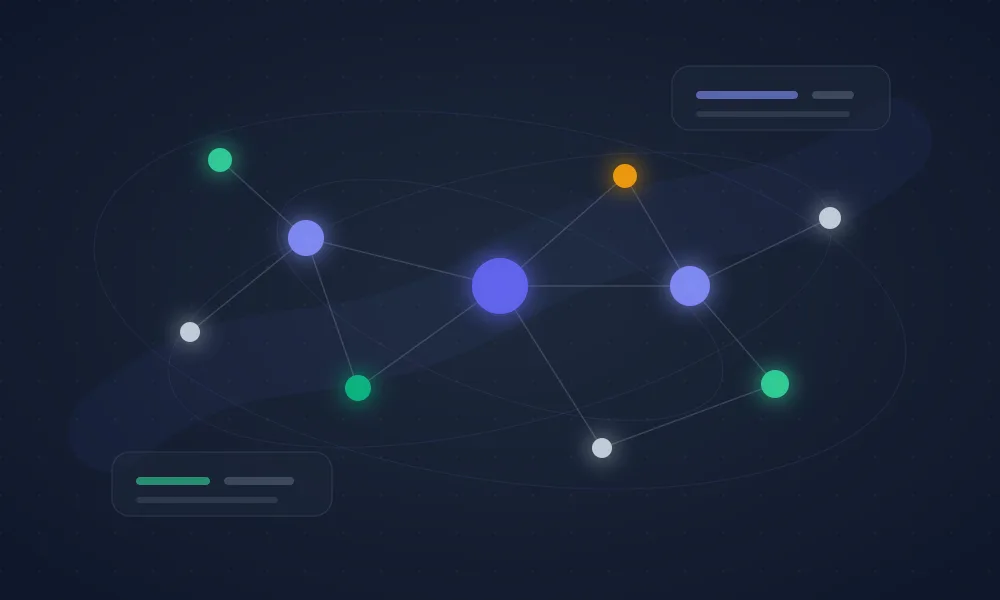
Relationships and rules modeled together
OTOworks Engine combines RAG (Retrieval-Augmented Generation), GraphRAG (graph-based reasoning over knowledge), and domain-specific ontologies (knowledge structuring). For each customer we tailor these layers to your data, workflows, and policies.
Technology Stack
Relationships and rules modeled together
RAG pipeline
Real-time retrieval from your unstructured documents, chat, and records, fed as grounding for AI decisions.
GraphRAG
Reasoning over relationships, not just documents. Handles multi-hop questions across entities.
Domain ontology
A knowledge graph of your business concepts, relations, and policies. This is the ground truth for AI judgment.
Engineering Notes
Tech Blog
Engineering posts and talks our team has published on external venues
 요즘IT(KO)
클로드 코드 소스 유출에서 배우는 에이전트 구조
Agents differ in structure, not the model. From the leaked Claude Code internals: 42 tools across 5 permission tiers and an MCP/Statsig/Sentry observability layer.
- 요즘IT(KO)
하네스 경쟁의 시작, 왜 opencode와 OMO일까?
"The harness, not the model, decides." How opencode + OMO, proven across 30 days and 2.47B cached tokens, lifted long coding tasks to completion.
Honest capacity signal
Because every engagement is custom-built, we keep concurrent project slots limited. We prioritize teams with a clearly defined high-value workflow, respond within one business day, and share the next available start window immediately.
Let's scope your custom build
We start by understanding the operation, not by walking through a product demo. In a 30-minute call we can map the first automation target and the likely PoC scope together.
Request Enterprise ConsultationContact Us · Email: contract@otoworks.ai